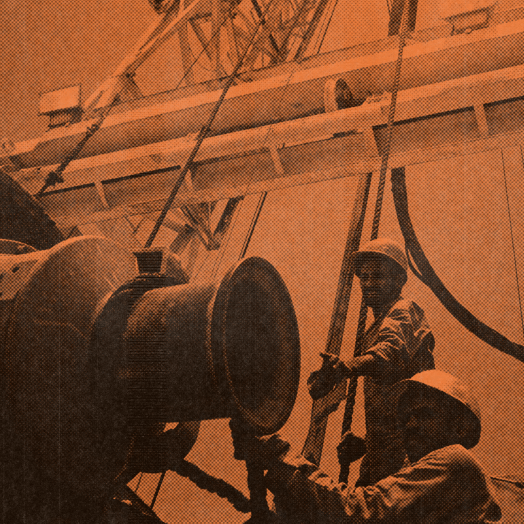
FairSquare research has uncovered serious abuses of migrant workers in Saudi Aramco’s supply chain. Aramco is Saudi Arabia’s national oil company and the world’s largest, but despite its wealth and influence, FairSquare investigations revealed that workers in its vast supply chain are exposed to extreme heat, subject to excessive working hours, forced to reside in slum housing, and rarely receive compensation following fatalities and injuries.
Aramco has a vast supply chain, and the thousands of contractors and sub-contractors that ensure the company’s smooth operations in Saudi Arabia rely overwhelmingly on migrant workers. FairSquare’s report is based on interviews with 27 individuals including former and current workers, and colleagues and relatives of deceased workers.
The report again raises serious concerns about the systematic mistreatment and abuse of migrant workers in Saudi Arabia. On 29 April 2026, independent UN experts on slavery and human trafficking called on Saudi Arabia to take “urgent and concrete action” to protect the country’s 16 million migrant workers as the country accelerates its preparations to host the 2034 men’s World Cup. Next month, Aramco will be one of the main sponsors at the 2026 men’s World Cup.
“Aramco is the commercial engine of Saudi Arabia and it has both responsibility and influence to protect the workers upon whom it depends,” said FairSquare director Nick McGeehan. “These findings should once again raise serious concerns about FIFA’s increasingly close relationship not just with Aramco, but with Saudi Arabia more generally.”
FairSquare found that workers at Aramco sites described being exposed to extreme temperatures of over 50 degrees celsius. Multiple workers recounted witnessing colleagues faint and collapse while working as a result from the heat. Another worker described taking a colleague to his supervisor after he collapsed shortly after his arrival in Saudi Arabia, saying “we thought he would die”. A worker who regularly worked shifts of up to 14 hours a day, and sometimes as long as from 5am to 10pm, began suffering health problems and was told to return to Nepal where he was diagnosed with Chronic Kidney disease “I think my blood problem began due to the heat. Then my kidneys failed.”
Several men employed as fuel tank drivers said they worked excessively long hours, without proper breaks, and that this created real risks of road traffic accidents with catastrophic potential. One driver described his work transporting a fuel tanker as being “like carrying bombs”. He said that he had fallen asleep at the wheel and driven off the road, and said that, “due to sleeplessness, many traffic accidents have occurred. People have been killed.”
One worker told researchers, “We live in a container accommodation. We get electric shocks when it rains. Workers described being provided poor food, with one comparing it to “what animals eat”. More than a third of workers interviewed as part of this investigation described unsanitary and cramped living conditions which meet the UN Habitat threshold for “slum housing”.
In the six cases we examined where workers died or sustained disabilities through their work, in only one case was adequate compensation paid to the men or their families, leaving them in debt and unable to meet basic expenses. Under Saudi Arabian law, worker’s families are entitled to compensation but the process is exceptionally complex and challenging, and without support from employers it is close to impossible for most migrant workers’ families to succeed. The wife of a worker who became paralysed after collapsing at work and received no compensation told researchers:
“I have no-one, I have nothing… I don’t know the reasons why [the company didn’t provide compensation]. But they should have. If a worker becomes sick at my home, I should be responsible.”
The wife of another worker who died, leaving behind his two young children, told researchers was never given an explanation of her husband’s death, or compensation.
“They said it was natural death… I have two children. They should give compensation for them. What to say, I lost my husband. The company should [compensate] because he died on duty… My husband worked on other people’s land for our children’s future but died.”
FairSquare has written to Aramco regarding these findings and has received no reply. FairSquare has also written to FIFA regarding its ongoing partnership with Aramco and has received no response.
Aramco’s sporting partners and the FIFA Men’s World Cup 2026
The abuse of migrant workers in Aramco’s supply chain adds to serious ongoing concerns about the broader human rights impact of its business model and practices. Aramco effectively holds the second-largest proven crude oil reserves in the world, and is the biggest state-controlled carbon emitter, accounting for 4.28% of global CO2 emissions in 2024. Its CEO said in 2024 that the world should “abandon the fantasy of phasing out oil and gas” and the organisation consistently ranks among the lowest performers in terms of alignment with the Paris Agreement, the 2015 UN agreement aimed at limiting global warming and preventing climate catastrophe.
In 2023, a number of UN Special Rapporteurs and the UN Working Group on Business and Human Rights took the unprecedented step of sending a communication to Saudi Aramco and its financial backers, raising serious concerns about the human rights impact of the company’s activities. Building on this unprecedented intervention from the UN Working Group, in September 2025 a coalition of NGOs, including FairSquare Human Rights Watch, wrote to FIFA and the other sporting organisations that have sponsorship deals with Aramco, including Formula 1 and the International Cricket Council. The letters alleged that their partnership with Aramco risks them “contributing to the undermining of international agreements on climate change and its resultant human rights impacts” and that by accepting sponsorship money from Aramco they provide “a platform for a company committed to expanding crude oil production and resisting the commitment to transition away from fossil fuels.”