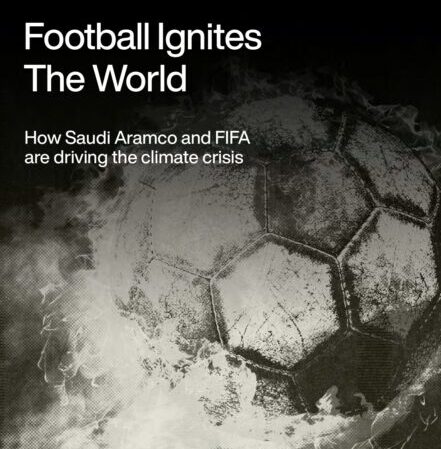
FIFA’s commercial deal with Saudi Aramco constitutes arguably the most dangerous example of fossil fuel advertising and sponsorship the world has ever seen, says a report issued today by FairSquare, Fossil Free Football, Reclame Fossielvrij, and Badvertising. This report explains how the world’s most popular sport is being used as a branding vehicle for the world’s biggest corporate polluter, why this poses a serious threat to the planet, and what can be done about it.
In April 2024, FIFA confirmed that Aramco would be a “Major Worldwide Partner, its biggest sponsor, in a deal that will run until 2027. The deal attaches the brand of Saudi Arabia’s state-owned oil and gas company to the global cultural force that is football, ensuring that its logo will be beamed into billions of homes around the world when the FIFA men’s World Cup begins on 11 June 2026.
The Aramco sponsorship deal is not the only way in which Saudi Arabia is exerting political and financial influence over football’s world governing body, but from the perspective of climate change, it is the most alarming aspect of their burgeoning relationship, and one that should renew calls from policymakers for a ban on fossil fuel advertising. The report also explains how this ban can be adopted at EU level.
“Gianni Infantino talks about football uniting the world while stuffing FIFA’s coffers with money from the world’s largest polluter”, said FairSquare director Nicholas McGeehan. “That FIFA is assisting Aramco in its climate-wrecking endeavours is possibly the best argument we have ever seen in favour of a fossil fuel advertising ban and a further argument in support of imposing reforms on FIFA itself”.
Frank Huisingh from Fossil Free Football said: “This World Cup will be hotter than ever due to climate change, with the heat posing a serious risk for players and fans. And in the middle of an escalating climate crisis and a fossil fuel energy crisis, FIFA sells the world’s biggest platform to an oil company and FIFA leadership cozies up the fossil fuel industry and its political friends. Football and football fans deserve so much better.”
“Deals like this expose a painful contradiction”, says Rémi ter Haar from Fossil Free Advertising NL. “While governments work to phase out fossil fuels, the world’s biggest polluter is given a global stage at the World Cup. This report once again highlights why a ban on fossil advertising is a necessity: the fossil industry tries to win over football fans through advertising.”
“FIFA has a responsibility to safeguard the future of the game”, says Freddie Daley from Badvertising, “but its deep and enduring relationship with Saudi Aramco undermines that commitment. Aramco is a major polluter that is actively undermining a future in which football can be played and enjoyed. If FIFA is serious about the future of football, it must cut ties with major polluters and stop using football as a billboard for more heat, more pollution and more disruption to the game.”
The report’s publication coincides with what one of its co-authors has described as “a wave of media and public interest in how climate change is rewriting sport”. It also follows a FairSquare investigation that uncovered serious abuses of migrant workers in Saudi Aramco’s supply chain. “Football Ignites the World” addresses the potential impact of Saudi Aramco’s activities on the planet, and the dangerous role that FIFA is now playing in helping them to achieve their goals.
The 57-page report is based on detailed and authoritative research, established scientific facts, and expert legal analysis. It describes the unique dangers that Saudi Arabia and Aramco pose to the climate, with reference to Aramco’s reserves, business model and practices, and Saudi Arabia’s obstruction of climate negotiations and attempts to artificially stimulate demand for oil. It details the pernicious role that fossil fuel advertising plays and how sport and sponsorship can increase advertising’s harmful potential. It examines how FIFA’s exploitative business model and dysfunctional governance models have led the organisation to become a tool for authoritarian states, and details the various ways in which Saudi Arabia is exerting influence over FIFA and through FIFA, with the Aramco sponsorship serving as the most visible link and one that can be effectively challenged. The report includes a section of detailed legal analysis outlining the role that the European Union, in particular, could play in implementing laws to prevent big polluters from harnessing the power of sport, and the various legal tools at the EU’s disposal to make this a reality.